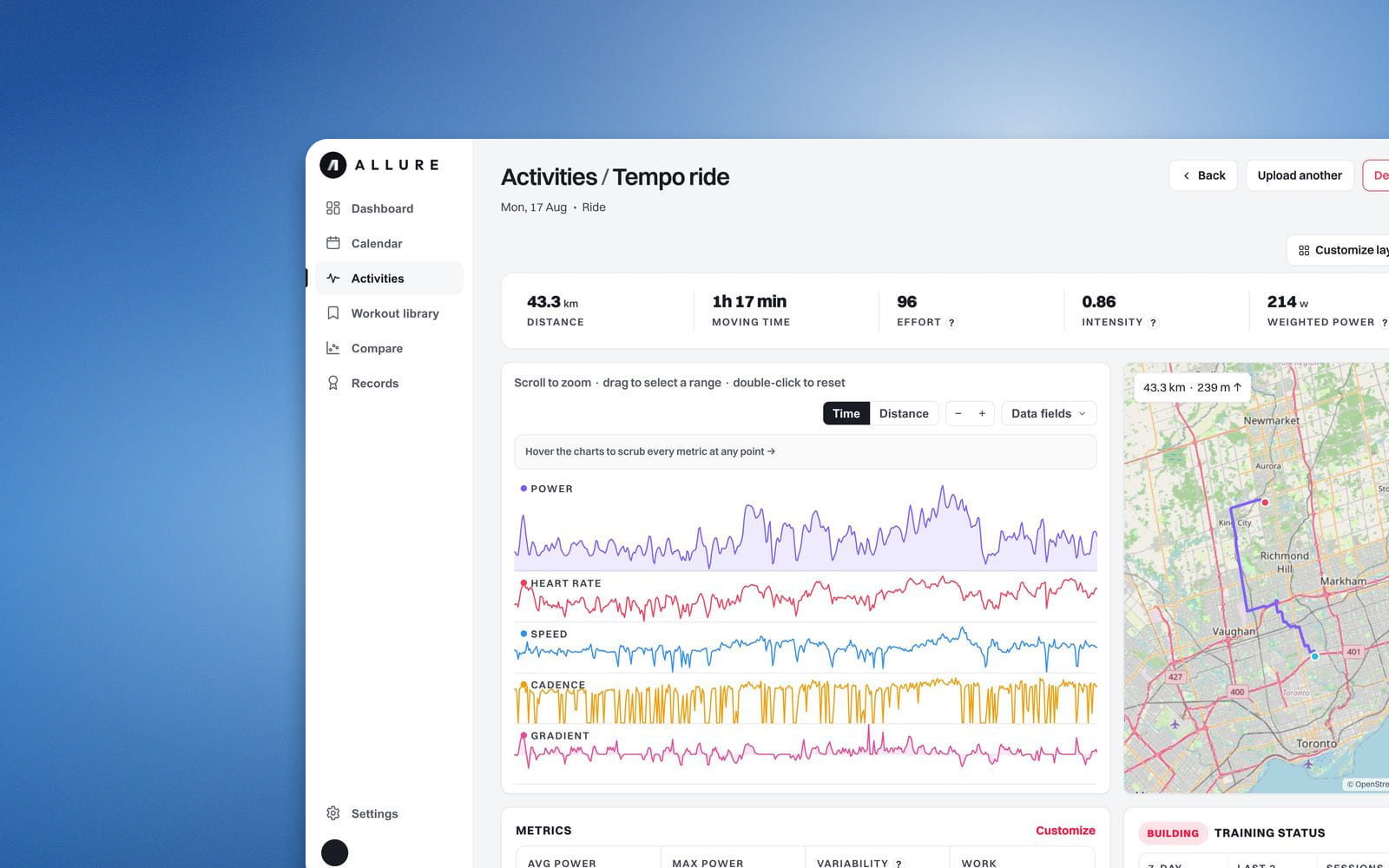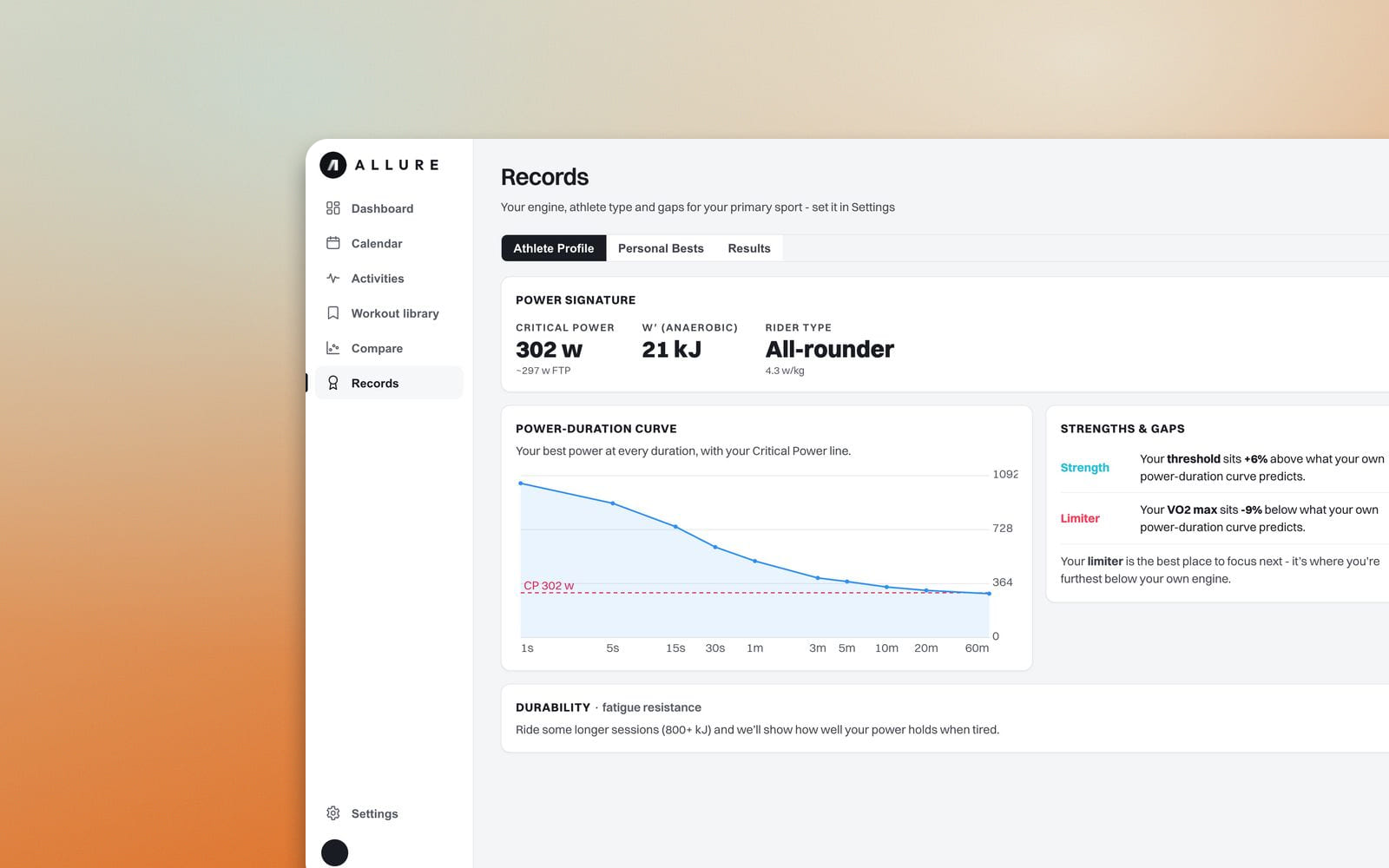
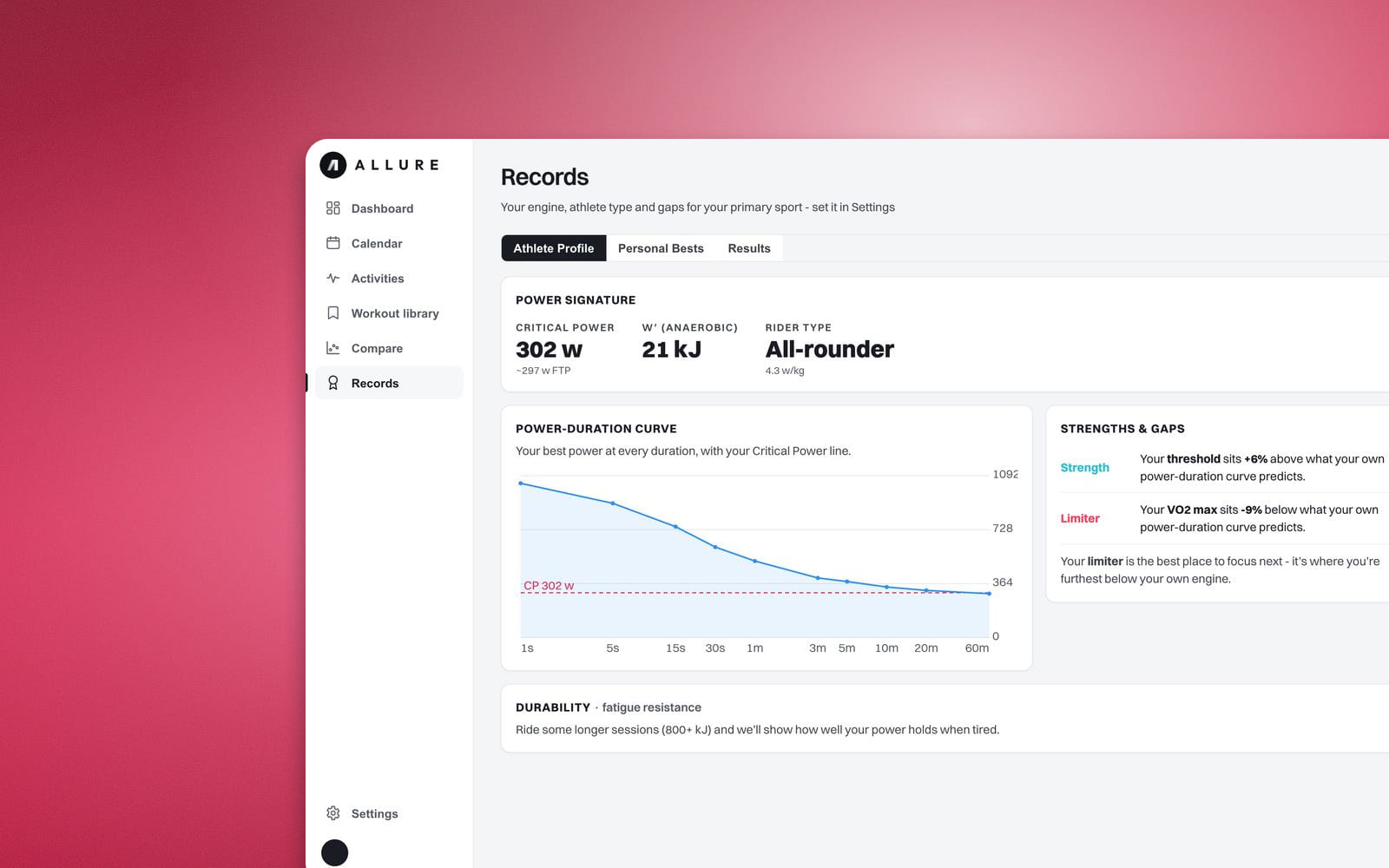
Why Your Fast is not Anyone Else's
Comparing your numbers to the peloton is a losing game. Here's why relative intensity is the only honest measure of how hard you're actually working.
The Work - Training Journal
Comparing your numbers to the peloton is a losing game. Here's why relative intensity is the only honest measure of how hard you're actually working.
Your threshold was measured fresh. Races aren't. Durability is the most useful idea to come out of endurance physiology in a decade, and almost nobody trains for it on purpose.
Sixty grams an hour was the ceiling for years. Then someone found a second door. Here's how the carbohydrate recommendation got to 90 and then 120, and how to work out which number is yours.
Your power curve collapses into two numbers: critical power and W'. Here's what each one physically is, and why the pair explains your racing better than FTP does.
Why OSO grades you against your own physiology instead of a population table, what the research says about how badly averages describe individuals, and the places we still have to assume.
Most amateurs ride their easy days too hard and their hard days too easy. Here's what the intensity distribution research actually says, including the part that usually gets left out.
Go fast, know why
OSO reads your own rides, runs and swims and tells you what they did to you, not what they'd do to somebody else.
Open the app